
October this year, Sequoia Capital published a blog post titled “Generative AI: A Creative New World”. Earlier December, ChatGPT (by OpenAI) went live and gained 1 million users in a matter of five days. In between these two headlines however, is the news that the world’s population officially passed the 8 billion mark on 15 November. It is hard not to think about the implication of fast-scaling AI in light of a huge population base that continues to grow. In a very long time, machines have been treated as our tools to complete specific tasks. With the emergence of general purpose AI, perhaps it is time to rethink our relationship with machines.
Sea changes in five years’ time
The day when AlphaGo beat Lee Sedol still seems only yesterday now we already have ChatGPT that makes Google looks like child’s play. Only five years ago, AI we know has been trained by local datasets and can only perform specific tasks. Five years later it is now plugged into machine hivemind and can perform various tasks such as image/speech recognition, audio/video generation, pattern detection, question answering, text to image translation, etc. As the progression is non-linear, it is hard to predict what next five years will bring in terms of AI.
Creativity is no longer a human privilege
For an extremely long time, creativity is the watershed that separates a human brain and a computer. Yet as of today, this is no longer a privilege that is reserved for human brains only. Stable diffusion can turn any text inputs into photo-realistic images. Not to mention the army of twitter bots that can tweet all day with given key words. While in the past technology continues to empower creators to come up with better media content, it appears that now it can replace the creators altogether. This includes creator of text and image content and soon audio/video. What is human beings’ role in this great shift to generative AI? Is there still a place for classic art and craftsmanship when machine can comes up with something superior in a much shorter time? An oil painting takes days, weeks or even years to complete while AI can complete something in a matter of minutes, hours or days.
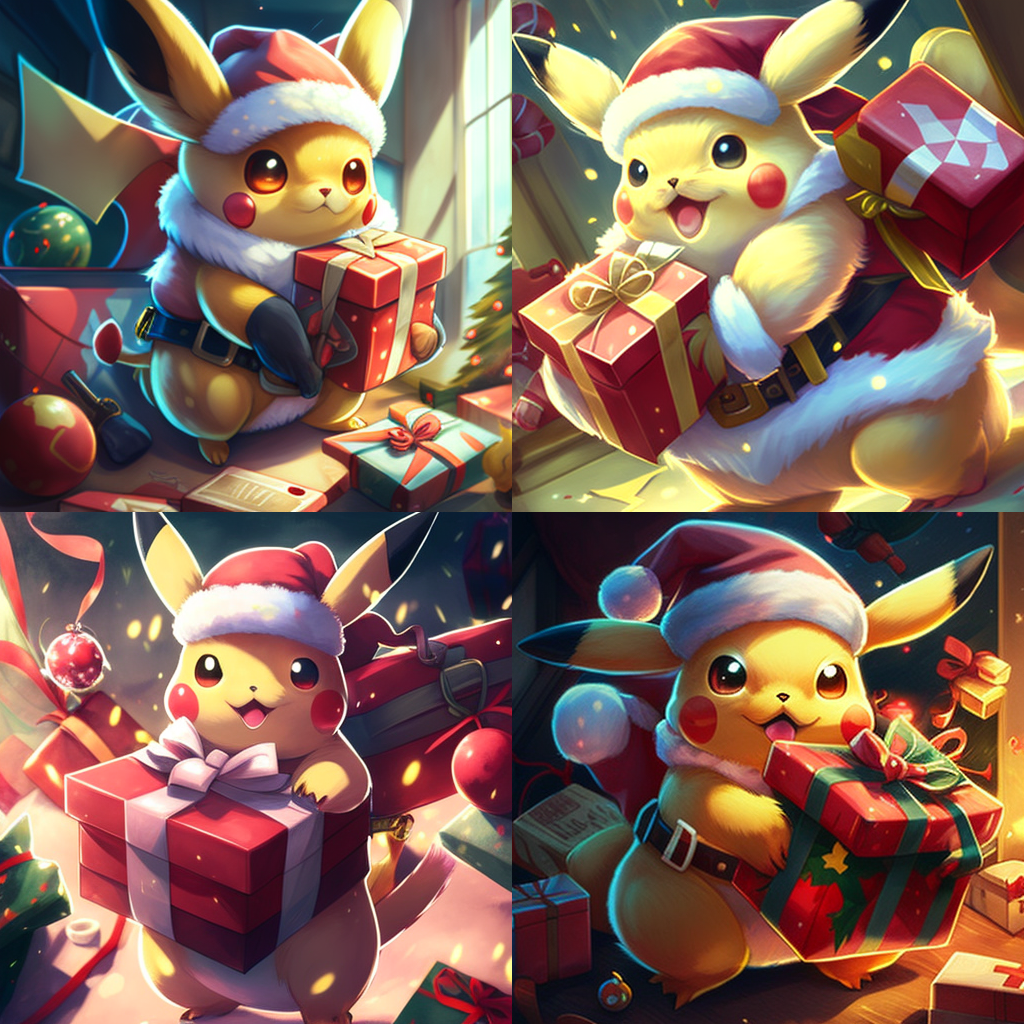
Meanwhile, it also empowers everyone to become a creator. Take applications such as Midjourney or Stable Diffusion for example, with a few text prompts, you can generate high definition images just like a professional. In fact I had so much fun playing with Midjourney. I can do it all day
This sea change forces every creator to re-think their role in the age of fast scaling generative AI.
santa pikachu with lots of gifts, cartoon, anime, colorful, 4k by Midjourney
Re-imagine customer support bots
I am sure that I am not the only one frustrated with talking to customer support bots. The problem? They are basically useless. They often open up the conversation with an unattractive, mechanic greetings followed by a list of clickable options. If you click on one of the options, you will find standard instructions which most likely you have already tried. A fun game I like to play with these chatbots is that how fast can I reach a human customer representative.
Now imagine we apply generative AI to create a chatbot that has personality and empathy. A bot can anticipate your needs reading between the line. A bot can synthesis the solution and paraphrase it rather than sending you a link for you to go figure. I am certainly looking forward to that.
AI coding assistant at your disposal
Although there is an army of technology startups working on a no-code future, any serious development work requires coding. But at least we have AI to help with the standard, repetitive and tedious parts. ChatGPT already proved that it can create a succinct smart contract with one single line of text order.
It can also do solidity contract audit, it seems.
Is it time to panic?
The new wave of generative AI applications has taken the internet by storm. While “capital” generally embraces the accelerated commercial application of generative AI, “labor” panicked. The optimistic camp thinks it is too early to panic as the existing AI technology is constrained to give standard responses and is unable to deal with any edge cases or unexpected environments. Some, however, are worried about large-scale AI going wrong. Given how far AI has improved in the last five years, the anxiety is not entirely without reasoning. Already, we see a handful of startups working on AI safety and AI ethics. But we might need more of that. Regardless, it is time for all of us to re-evaluate the digital reality and re-think our relationship with machines.
 Dreamerella